


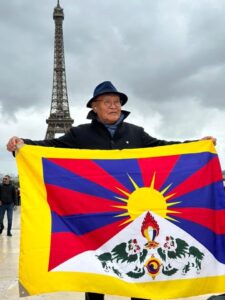
Anniversaire, élections et engagement : mon regard sur la démocratie tibétaine
Le 2 septembre 2025, le Kashag a publié une déclaration (voir liens ci-joints, en tibétain, anglais et français) à l’occasion du 65ᵉ anniversaire de la démocratie tibétaine. Elle revient sur les étapes marquantes qui ont façonné l’architecture politique des Tibétains en exil depuis 1959. Dès son arrivée en Inde, le 14ᵉ Dalaï-Lama a voulu instaurer un système démocratique adapté à une communauté déracinée. Le 2 septembre 1960, l’assermentation de la première Commission des Députés du Peuple Tibétain ouvrait une ère nouvelle : celle d’une démocratie en exil, inédite dans l’histoire d’un peuple réfugié.
La déclaration retrace les grands jalons : la promulgation de la Charte des Tibétains en exil en 1991, l’élection directe du chef de l’exécutif en 2001, puis, en 2011, le transfert intégral du pouvoir politique par le Dalaï-Lama à une autorité élue par le peuple. Elle souligne également l’importance de réformes institutionnelles en cours, appelées à s’adapter aux législations des pays hôtes et aux évolutions de la diaspora.
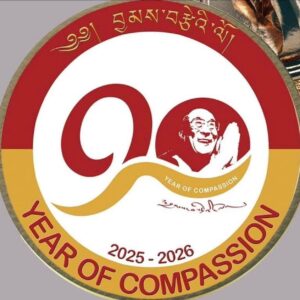
Au-delà du rappel historique, le texte met l’accent sur les 90 ans du Dalaï-Lama, proclamant 2025-2026 comme « Année de la Compassion ». Il affirme la continuité de l’institution des Dalaï-Lamas, dénonce l’ingérence de la Chine dans la question de la réincarnation et fustige les politiques de sinisation qui menacent le bouddhisme et l’identité tibétaine. Enfin, le Kashag salue les soutiens internationaux et appelle à l’unité et à la mobilisation.
Mais la déclaration n’ose pas dire clairement que le 14ᵉ Dalaï-Lama est le véritable Père de la démocratie tibétaine. Le texte se contente de mentionner qu’il a « tenu un rôle » important dans sa fondation. Or, « tenir un rôle » n’est pas la même chose qu’être le Père Fondateur de la démocratie tibétaine. En l’année de ses 90 ans, ce silence affaiblit considérablement la portée du message. Les réformes sont évoquées sans contenu concret, et l’unité du peuple tibétain, question cruciale pour toute démocratie, est absente. Le ton religieux occupe en outre une place trop importante, au détriment d’un discours politique et juridique plus percutant. Depuis l’occupation, nous réclamons toujours le droit d’exister du Tibet et du peuple tibétain.
Sur la forme, le texte souffre de sa longueur, qui dilue son impact. Une déclaration plus courte et mémorable aurait renforcé sa portée symbolique et politique, recentrée sur l’acte fondateur de Dharamsala en 1960 et sur les acquis des 65 années écoulées. En définitive, cette déclaration a une valeur historique et diplomatique, mais elle manque d’audace. Une parole plus claire sur le rôle fondateur du Dalaï-Lama et sur l’unité nationale aurait donné un souffle supplémentaire.
C’est dans ce contexte que s’ouvrira la prochaine étape : les élections de 2026. Le 13 août 2025, la Commission électorale centrale a annoncé le lancement du processus. Le 1er octobre, la prestation de serment des deux commissaires additionnels marquera l’entrée officielle dans la séquence électorale. Le scrutin portera à la fois sur l’élection du Sikyong, chef de l’Administration centrale tibétaine en exil, et sur le renouvellement des 45 députés du Parlement tibétain en exil. Les Tibétains de la diaspora, dispersés à travers le monde, seront appelés à voter, comme ils l’avaient fait en 2021.
Ce processus témoigne de la maturité institutionnelle acquise en exil. Il sera aussi un test pour la mobilisation d’une communauté confrontée à l’érosion de ses soutiens internationaux et à la fermeture de médias historiques comme Radio Free Asia. Plus que jamais, une forte participation électorale est essentielle pour maintenir la légitimité et la visibilité du combat démocratique tibétain. Ces élections seront également l’occasion d’un renouvellement générationnel, avec une jeunesse née en exil de plus en plus engagée dans la vie civique et politique.
En 2026, je souhaite inscrire mon vote dans la continuité de cette vision. Inspiré par le poète qui affirmait que « la femme est l’avenir de l’homme », et par les mots du Dalaï-Lama déclarant que les femmes ont « la capacité de mener le monde vers plus de paix, de compassion et de bonté », je choisirai de voter pour des candidates.
Une Sikyong femme, et au minimum une députée tibétaine élue, sur deux pour l’Europe, au Parlement tibétain en exil : voilà les changements auxquels je veux contribuer.
Vive le Tibet, Vive le Peuple Tibétain et Vive la jeune démocratie tibétaine !
Longue vie à Sa Sainteté
གུས་བོད་པའི་གླེན་ཆུང་ནུབ་པ་ཨོ་རྒྱན་ནས།
Le P’tit Bêtain Ugen : Fait pupille de la Nation française en 1962 par Charles de Gaulle Président de la république française.
Mon choix de citation pour ce 65ᵉ anniversaire de la démocratie tibétaine :
« La démocratie, d’après l’idée que je m’en fais, devrait assurer au plus faible les mêmes opportunités qu’au plus fort. Seule la non-violence peut aboutir à ce but. » Mahatma Gandhi, dans True Democracy (Harijan, 27 mai 1939)
Pour Gandhi, la démocratie n’est pas qu’un mécanisme électoral, mais une véritable justice sociale : elle doit donner au plus faible les mêmes chances qu’au plus fort. Et seul le chemin de la non-violence peut y conduire, car la violence ne fait que reproduire les hiérarchies et la domination.
C’est précisément dans cet esprit que le 14ᵉ Dalaï-Lama, père de la démocratie tibétaine, a renoncé à son pouvoir politique pour le confier à des institutions élues par le peuple en exil. Par ce geste fondateur, il a montré que la démocratie tibétaine n’est pas seulement une organisation politique, mais un acte de confiance, de dignité, de justice et de non-violence.
Anniversary, Elections, Commitment: My Perspective on Tibetan Democracy (en anglais puis en français)
Déclaration du Kashag à l’occasion du 65ème anniversaire de la Journée de la Démocratie tibétaine
En Français:
Statement of the Kashag on the Sixty-Fifth Anniversary of the Tibetan Democracy Day
In English :
https://www.ugen-tenzing-nubpa.ch/wp-content/uploads/2025/09/english-statement-of-the-kashag.pdf
བོད་ཡིག་ཏུ། ། བོད་མིའི་མང་གཙོ་དབུ་བརྙེས་ཏེ་མི་ལོ་༦༥ཧྲིལ་པོ་འཁོར་བའི་དུས་ཆེན་མཛད་སྒོའི་ཐོག་བོད་མི་མང་སྤྱི་འཐུས་ལྷན་ཚོགས་ཀྱི་གསུང་བཤད།།
https://www.ugen-tenzing-nubpa.ch/wp-content/uploads/2025/09/democracy-day-tibetan-statement.pdf
On September 2, 2025, the Kashag issued a statement (see attached links, in Tibetan, English and French) marking the 65th anniversary of Tibetan democracy. It recalls the key milestones that have shaped the political framework of Tibetans in exile since 1959. Upon his arrival in India, the 14th Dalai Lama sought to establish a democratic system suited to a displaced community. On September 2, 1960, the swearing-in of the first Commission of Tibetan People’s Deputies opened a new era: that of a democracy in exile, unprecedented in the history of a refugee people.
The statement reviews the major stages: the promulgation of the Charter of the Tibetans in Exile in 1991, the direct election of the head of the executive in 2001, and then, in 2011, the complete transfer of political power by the Dalai Lama to an authority elected by the people. It also highlights the importance of ongoing institutional reforms, intended to adapt to the laws of host countries and to the evolving realities of the diaspora.
Beyond this historical reminder, the text highlights the Dalai Lama’s 90th birthday, proclaiming 2025–2026 as the “Year of Compassion.” It affirms the continuity of the institution of the Dalai Lamas, rejects China’s interference in the matter of reincarnation, and denounces policies of sinicization that threaten Tibetan Buddhism and the identity of the Tibetan people. Finally, the Kashag welcomes international support and calls for unity and mobilization.
But the statement does not dare to say clearly that the 14th Dalai Lama is the true Father of Tibetan democracy. It merely mentions that he “played an important role” in its founding. Yet to “play a role” is not the same as being the Founding Father of Tibetan Democracy. In the year of his 90th birthday, this omission seriously weakens the message. The reforms are mentioned without concrete substance, and the unity of the Tibetan people — a crucial issue for any democracy — is absent. The religious tone also takes up too much space, at the expense of a more political and legal discourse. Since the occupation, we have always claimed the right of Tibet and the Tibetan people to exist.
In terms of form, the text suffers from its length, which dilutes its impact. A shorter and more memorable declaration would have strengthened its symbolic and political weight, centered on the founding act of Dharamsala in 1960 and the achievements of the past 65 years. Ultimately, this declaration has historical and diplomatic value, but it lacks boldness. A clearer statement on the Dalai Lama’s founding role and on national unity would have given it greater force.
It is in this context that the next stage will unfold: the 2026 elections. On August 13, 2025, the Central Election Commission announced the launch of the process. On October 1, the swearing-in of two additional commissioners will mark the official start of the electoral sequence. The ballot will cover both the election of the Sikyong, head of the Central Tibetan Administration in exile, and the renewal of the 45 deputies of the Tibetan Parliament in Exile. Tibetans of the diaspora, scattered around the world, will be called to vote, as they did in 2021.
This process demonstrates the institutional maturity acquired in exile. It will also be a test of the mobilization of a community faced with the erosion of international support and the closure of historic media such as Radio Free Asia. More than ever, strong voter participation is essential to maintain the legitimacy and visibility of the Tibetan democratic struggle. These elections will also be an opportunity for generational renewal, with a youth born in exile increasingly committed to civic and political life.
In 2026, I wish to cast my vote in continuity with this vision. Inspired by the poet who affirmed that “woman is the future of man,” and by the words of the Dalai Lama declaring that women have “the capacity to lead the world toward greater peace, compassion, and kindness,” I will choose to vote for female candidates. A female Sikyong, and at least one Tibetan woman elected out of the two seats for Europe in the Tibetan Parliament in Exile: these are the changes I wish to support.
Long Live His Holiness the 14th Dalai-Lama!
Long live Tibet, long live the Tibetan people, and long live our young democracy!
གུས་བོད་པའི་གླེན་ཆུང་ནུབ་པ་ཨོ་རྒྱན་ནས།
The little silly Tibetan Ugen
My chosen quotation for the 65th anniversary of Tibetan democracy :
“Democracy, as I understand it, should ensure the weakest the same opportunities as the strongest. Only non-violence can lead to that goal.” Mahatma Gandhi, in True Democracy (Harijan, 27 mai 1939)
For Gandhi, democracy was not merely an electoral mechanism but a true social justice: it must give the weakest the same chances as the strongest. And only the path of non-violence can achieve this, for violence only reproduces hierarchies and domination.
It is precisely in this spirit that the 14th Dalai Lama, father of Tibetan democracy, renounced his political power and entrusted it to institutions elected by the people in exile. Through this founding gesture, he showed that Tibetan democracy is not only a political system, but also an act of trust, dignity, justice, and non-violence.