


Chitues 2026, can Tibetan democracy be left in crisis in Europe?
(LA VERSION FRANÇAISE SUIT L’ARTICLE EN ANGLAIS)
Following the press conference of the Central Election Commission held on May 13, 2026 in Dharamsala, the official results are now known. But behind the global figures and declarations of victory, a far more troubling reality is emerging.
The voter turnout in the second round of the Tibetan elections fell to 45.71% in 2026, compared to 77.02% in 2021, 65.67% in 2016, and 59% in 2011. This is the lowest level seen in years. Such a sharp decline clearly reflects a weakening of democratic participation. The low turnout in Europe already leads me to a simple conclusion: I am saddened for Tibetan democracy. In Europe, real participation can be estimated at around 12,4%. In Switzerland, where I am a citizen, it reaches around 33%, the highest level on the continent. In France, my country of heart where I grew up as a ward of the French Nation, it stands around 7%. The contrast is striking.
This analysis is based on an estimate of the adult Tibetan population actually living in Europe, and not only on official voter lists or Green Book holders.
In Switzerland and Liechtenstein, around 95% of Tibetans are members of the Tibetan Community in Switzerland and Liechtenstein. In France, only 1 to 2% are members of the Tibetan Community in France and Friends. An unavoidable political question therefore arises: what has Thupten Gyatso actually built for Tibetan democracy and Tibetan unity in France during his mandate as Tibetan MP for Europe, while living in Paris? He also failed to help resolve the ongoing crisis within the Tibetan Community in Belgium, despite it representing one of the largest Tibetan populations in Europe.
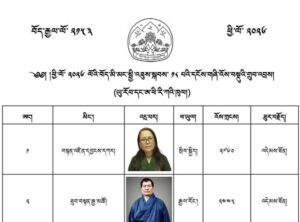
At the end of this election, Tenyang and Thupten Gyatso were elected as representatives for Europe in the 18th Tibetan Parliament in Exile. But the real winner remains abstention. Around 88% of Tibetans in Europe did not take part in the vote. Who will truly represent this silent majority?
Already during the 17th Assembly, a deep malaise was visible. A significant part of the Tibetan population in Europe no longer recognized itself in its representatives. Internal tensions, institutional blockages, and the lack of visible results weakened the very foundations of Tibetan democracy. Thupten Gyatso and Venerable Thubten Wangchen were among the representatives during that period.
Today, many Tibetans in Europe seem to place greater trust in the Offices of Tibet and the official representatives of His Holiness the Dalai Lama than in the European MPs themselves.
In France, the two elected representatives together account for less than 4% of the potential support of the estimated Tibetan population. Where is the political legitimacy when more than 96% of the Tibetans in the country where they live did not elect them?
This malaise did not emerge without reason. Many Tibetans felt that both candidacies lacked a clear political vision, concrete objectives, and genuinely mobilizing projects. In the end, many only saw a desire to be elected, or re-elected.
Another worrying signal also appears: only nine women were elected to the new Parliament, the lowest number in twenty years.
This analysis is not an attack against Tibetan democracy. It is a warning signal. A weakened democracy is not a dead democracy. But it must hear what the figures, abstention, and the growing silence of a part of the Tibetan people, especially in Europe, are saying today.
Long live Tibet,
Long live the Tibetan people,
Long live Tibetan democracy
The Little Silly Tibetan Ugen
གུས་བོད་པའི་གླེན་ཆུང་ནུབ་པ་ཨོ་རྒྱན་ནས།
Chitues 2026, peut-on laisser la démocratie tibétaine en crise en Europe ?
Comme suite à la conférence de presse de la Commission électorale centrale du 13 mai 2026 à Dharamsala, les résultats officiels sont désormais connus. Mais derrière les chiffres globaux et les proclamations de victoire, une réalité bien plus préoccupante apparaît.
Le taux de participation au second tour des élections tibétaines est tombé à 45,71 % en 2026, contre 77,02 % en 2021, 65,67 % en 2016 et 59 % en 2011. Il s’agit du niveau le plus bas observé depuis des années. Une chute brutale qui révèle un affaiblissement évident de la mobilisation démocratique. Le faible taux de participation en Europe m’amène à un constat simple : je suis triste pour la démocratie tibétaine. En Europe, la participation réelle peut être estimée autour de 12,4 %. En Suisse, où je suis citoyen, elle atteint environ 33 %, le niveau le plus élevé du continent. En France, mon pays de cœur où j’ai grandi comme pupille de la Nation, elle tourne autour de 7 %. Le contraste est brutal.
Cette analyse repose sur une estimation de la population tibétaine adulte vivant réellement en Europe, et non sur les seules listes officielles ou les détenteurs du livret vert.
En Suisse et au Liechtenstein, environ 95 % des Tibétains sont membres de la Communauté Tibétaine. En France, seulement 1 à 2 % sont membres de la Communauté Tibétaine en France et ses Amis. Une question devient alors inévitable : qu’a réellement construit Thupten Gyatso pour la démocratie tibétaine et l’unité des Tibétains de France durant son mandat européen, alors même qu’il vit à Paris ?
Il n’a pas davantage réussi à contribuer à une sortie de crise au sein de la Communauté Tibétaine de Belgique, qui rassemble pourtant l’une des plus importantes populations tibétaines d’Europe.
À l’issue de ce scrutin, Tenyang et Thupten Gyatso sont élus représentants de l’Europe au sein de la 18e Assemblée du Parlement tibétain en exil. Mais le véritable vainqueur reste l’abstention. Environ 88 % des Tibétains d’Europe ne se sont pas exprimés. Qui représentera réellement cette immense majorité silencieuse ?
Déjà durant la 17e Assemblée, un profond malaise était visible. Une partie importante des Tibétains d’Europe ne se reconnaissait plus dans ses représentants. Les tensions internes, les blocages et le manque de résultats ont fragilisé les piliers mêmes de la démocratie tibétaine. Thupten Gyatso et le Vénérable Thubten Wangchen faisaient partie des représentants de cette période.
Beaucoup de Tibétains d’Europe semblent aujourd’hui faire davantage confiance aux Bureaux du Tibet et aux représentants officiels de Sa Sainteté le Dalaï-Lama qu’aux députés européens eux-mêmes.
En France, les deux élus réunis représentent moins de 4 % du soutien potentiel de la population tibétaine estimée. Où est la légitimité politique lorsque plus de 96 % des Tibétains du pays où ils vivent ne les ont pas élus ?
Ce malaise ne surgit pas sans raison. Beaucoup de Tibétains ont eu le sentiment que les deux candidatures manquaient de vision politique claire, d’objectifs concrets et de projets réellement mobilisateurs. Au final, beaucoup n’y ont vu qu’une volonté d’être élu, ou réélu.
Un autre signal inquiétant apparaît également : seulement neuf femmes ont été élues dans le nouveau Parlement, le chiffre le plus bas depuis vingt ans.
Cette analyse n’est pas une attaque contre la démocratie tibétaine. C’est un signal d’alarme. Une démocratie fragilisée n’est pas une démocratie morte. Mais elle doit entendre ce que disent aujourd’hui les chiffres, l’abstention et le silence grandissant d’une partie du peuple tibétain, particulièrement en Europe.
Vive le Tibet,
Vive le peuple tibétain,
Vive la démocratie tibétaine
Le P’tit Bêtain Ugen
གུས་བོད་པའི་གླེན་ཆུང་ནུབ་པ་ཨོ་རྒྱན་ནས།