


RÉACTION AU CLAIR DE L’ŒIL-ÉCOUTE DU P’TIT BÊTAIN UGEN-TENZING, SUITE À LA LECTURE DE CET ARTICLE DE LOBSANG GURUNG
https://bitterwinter.org/going-home-to-tibet-chinas-propaganda-trap-for-diaspora-tibetans/
English version below
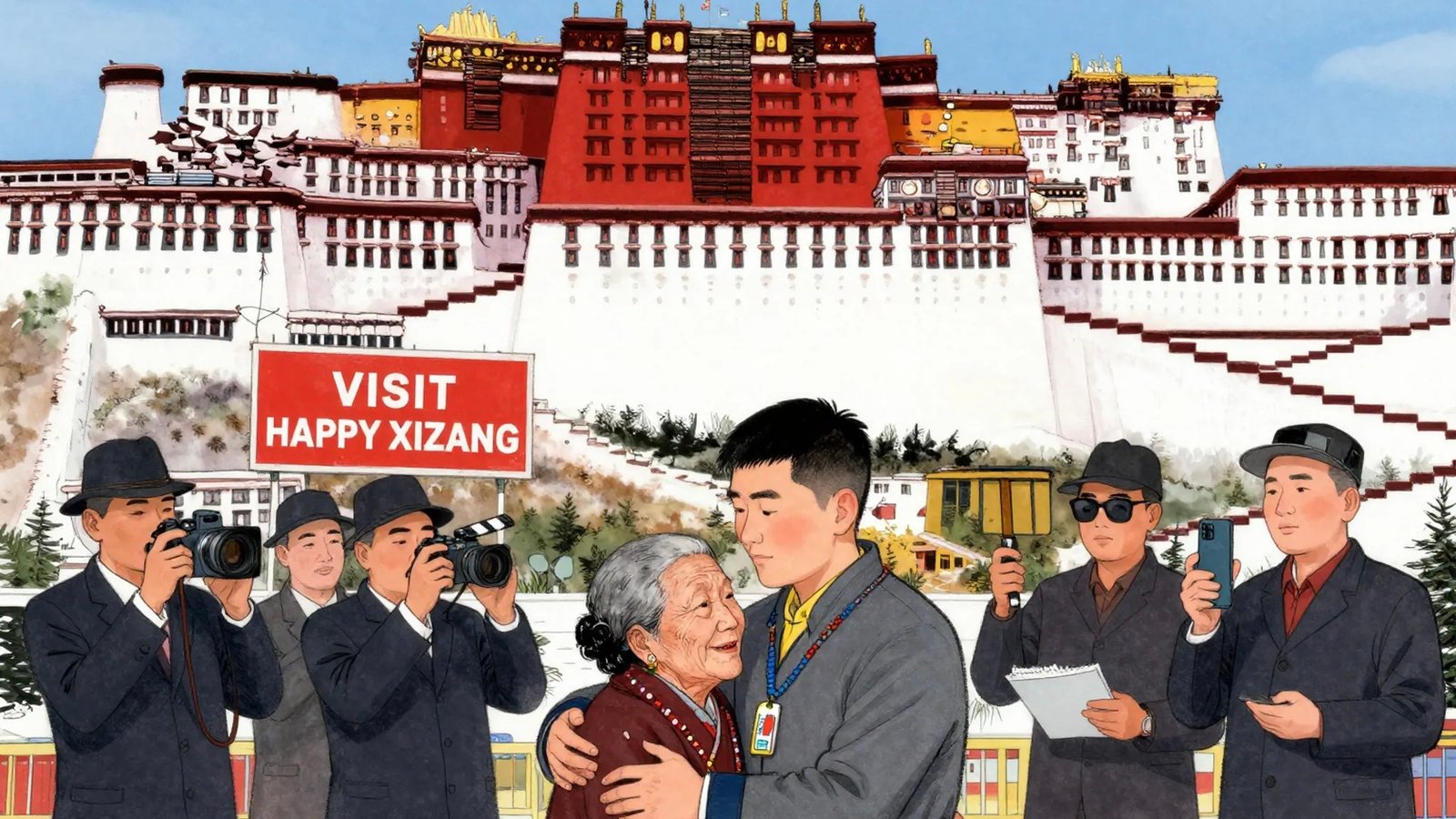
Faire du tourisme dans un Tibet soumis à une occupation que nous considérons comme coloniale et impérialiste n’est pas un acte anodin. C’est prendre le risque d’entrer dans le décor soigneusement construit par le PCC et de servir, volontairement ou non, son narratif politique. Car derrière les paysages, les monastères restaurés pour les visiteurs et les images d’un Tibet prétendument heureux et prospère, une politique d’effacement est à l’œuvre : effacer le nom même du TIBET en lui substituant « Xizang », effacer le peuple tibétain en le réduisant au statut de « minorité ethnique chinoise », effacer son histoire, sa langue, sa culture et son identité propre pour les fondre dans le récit national imposé par Pékin. Et oui, il existe malheureusement une infime minorité de Tibétains de la diaspora, à mon humble avis moins d’un sur mille, qui acceptent de relayer ce narratif de propagande du PCC. Je pense notamment à la chanteuse Dechen Shak qui, en Suisse, a publiquement remercié la République populaire de Chine pour ce qu’elle présente comme les « internats chinois » destinés aux enfants du « Xizang ». Pourtant, malgré la propagande mensongère et agressive du PCC, cette réalité est désormais largement documentée. Le Parlement européen lui-même a demandé, à une majorité écrasante, l’abolition immédiate du système d’internats imposé aux enfants tibétains au Tibet, en condamnant les politiques d’assimilation qui menacent leurs traditions linguistiques, culturelles et religieuses.
https://www.europarl.europa.eu/doceo/document/TA-9-2023-0479_EN.html
La résolution du 14 décembre 2023 a été adoptée par 477 voix pour, seulement 14 contre et 45 abstentions. 477 pour, 14 contre, les chiffres parlent d’eux-mêmes. Mais de quoi parle-t-on réellement derrière ces « internats chinois » ? D’un système imposé à une immense partie de l’enfance tibétaine et dénoncé comme un puissant instrument d’assimilation et de sinisation. Derrière l’expression rassurante d’« internats chinois » se cachent en réalité de véritables camps de sinisation. Plus d’un million d’enfants mineurs tibétains seraient ainsi arrachés à leur famille et placés dans ces camps de sinisation, loin de leur foyer et de leur environnement familial, linguistique et culturel. C’est aussi là que se joue l’avenir de la langue, de la culture et de l’identité du peuple tibétain. Et lorsqu’on est soi-même Tibétain de la diaspora et que l’on réclame justice pour le Tibet et pour le peuple tibétain, la question devient encore plus grave. Revoir sa famille au Tibet est humain et légitime, personne ne peut le contester. Mais participer à des voyages touristiques organisés, encadrés et mis en scène par les autorités chinoises, puis revenir en montrant les belles routes, les hôtels, les paysages et les sourires que le PCC a bien voulu laisser voir, c’est prendre le risque de devenir, parfois sans même s’en rendre compte, un acteur de sa propagande. Et c’est là qu’apparaît une contradiction flagrante : tandis que certaines visites soigneusement encadrées sont encouragées, valorisées et utilisées pour montrer au monde un Tibet prétendument heureux et prospère, les journalistes et observateurs indépendants rencontrent, eux, de fortes restrictions d’accès. Si Pékin n’avait réellement rien à cacher et souhaitait simplement permettre au monde de constater librement la situation au Tibet, la solution serait pourtant très simple : ouvrir le Tibet et laisser les journalistes, diplomates, chercheurs, organisations internationales et défenseurs des droits humains y circuler librement, rencontrer qui ils veulent et enquêter sans surveillance ni itinéraire imposé. Pourquoi montrer aux visiteurs ce que le PCC a choisi qu’ils voient, tout en empêchant les observateurs indépendants de regarder librement ce qu’il ne veut pas montrer ? C’est précisément cette asymétrie qui en dit long. Le Tibet n’est pas « Xizang ». Le peuple tibétain n’est pas une « minorité chinoise ». Le Tibet est le Tibet et le peuple tibétain est un peuple à part entière. C’était vrai hier, c’est vrai aujourd’hui et cela le restera. Pour moi, le temps n’est donc pas au tourisme complaisant dans le Tibet-vitrine que le PCC veut montrer au monde. Le temps est à la résistance non-violente. Résister à l’effacement du nom TIBET, résister à la sinisation, résister à tout narratif colonial imposé par Pékin, résister sans haine et sans violence, mais sans complaisance, sans soumission et sans renoncement. On peut contrôler un itinéraire, choisir ce qu’un visiteur verra et fabriquer de belles images. On peut tenter de remplacer « Tibet » par « Xizang » et un peuple par une « minorité ». Mais tant que les Tibétains continueront à résister et à affirmer leur identité, leur histoire et leur droit d’exister, le Tibet ne pourra pas être effacé.
Continuons la résistance non-violente tibétaine !
Vive le Tibet,
Vive le peuple tibétain !
En ce jour de Lhakar, ལྷག་དཀར་བཟང།, « Mercredi Blanc », Jour de la Résistance Non-Violente Tibétaine.
གུས་བོད་པའི་གླེན་ཆུང་ནུབ་པ་ཨོ་རྒྱན་བསྟན་འཛིན་ནས།
Le P’tit Bêtain Ugen-Tenzing
Vice-Président de France-Tibet
https://tibet.fr/
REACTION FROM THE LITTLE SILLY TIBETAN UGEN-TENZING AFTER READING THIS ARTICLE BY LOBSANG GURUNG
Going Home to Tibet: China’s Propaganda Trap for Diaspora Tibetans
Travelling as a tourist in Tibet, under what we regard as a colonial and imperialist occupation, is not an innocent act. It means running the risk of stepping into a carefully constructed set designed by the Chinese Communist Party (CCP) and, willingly or not, helping to promote its political narrative.
Behind the landscapes, the monasteries restored for visitors, and the images of a supposedly happy and prosperous Tibet, a policy of erasure is under way: erasing the very name of TIBET by replacing it with “Xizang”; erasing the Tibetan people by reducing them to the status of a “Chinese ethnic minority”; erasing their history, language, culture, and distinct identity by forcing them into the national narrative imposed by Beijing.
And yes, unfortunately, there is a tiny minority of Tibetans in the diaspora, fewer than one in a thousand, in my humble opinion, who agree to repeat the CCP’s propaganda narrative. I am thinking in particular of the singer Dechen Shak, who publicly thanked the People’s Republic of China in Switzerland for what it presents as “Chinese boarding schools” for the children of “Xizang.”
Yet despite the CCP’s aggressive and deceptive propaganda, this reality is now widely documented. The European Parliament itself has called, by an overwhelming majority, for the immediate abolition of the boarding-school system imposed on Tibetan children in Tibet. It has condemned assimilation policies that threaten their linguistic, cultural, and religious traditions.
https://www.europarl.europa.eu/doceo/document/TA-9-2023-0479_EN.html
The resolution adopted on 14 December 2023 received 477 votes in favour, only 14 against, and 45 abstentions.477 in favour, 14 against, the figures speak for themselves.
But what are we really talking about when we use the reassuring expression “Chinese boarding schools”? A system imposed on a vast proportion of Tibetan children and denounced as a powerful instrument of assimilation and Sinicisation. Behind the reassuring words “Chinese boarding schools” lie, in reality, genuine camps of Sinicisation.
More than one million Tibetan children are reportedly being torn away from their families and placed in these Sinicisation camps, far from their homes and from their family, linguistic, and cultural environment. The future of the Tibetan people’s language, culture, and identity is also at stake there.
And when you are yourself a Tibetan from the diaspora and demand justice for Tibet and for the Tibetan people, the issue becomes even more serious. Seeing one’s family again in Tibet is human and legitimate, no one can deny that. But taking part in organised tourist trips, supervised and staged by the Chinese authorities, and then returning to display the beautiful roads, hotels, landscapes, and smiles that the CCP has chosen to show means running the risk of becoming, sometimes without even realising it, an instrument of its propaganda.
This is where the contradiction becomes glaring. While certain carefully controlled visits are encouraged, promoted, and used to show the world a supposedly happy and prosperous Tibet, journalists and independent observers face severe restrictions on access.
If Beijing truly had nothing to hide and simply wanted the world to see freely what is happening in Tibet, the solution would be very simple: open Tibet and allow journalists, diplomats, researchers, international organisations, and human-rights defenders to travel freely, meet whomever they wish, and investigate without surveillance or imposed itineraries.
Why show visitors only what the CCP has chosen for them to see, while preventing independent observers from freely examining what it does not want them to see? This asymmetry speaks for itself.
Tibet is not “Xizang.” The Tibetan people are not a “Chinese ethnic minority.” Tibet is Tibet, and the Tibetan people are a people in their own right. That was true yesterday, it is true today, and it will remain true.
For me, this is not the time for complacent tourism in the showcase Tibet that the CCP wants to present to the world. This is the time for non-violent resistance.
Resistance to the erasure of the name TIBET, resistance to Sinicisation, resistance to every colonial narrative imposed by Beijing, resistance without hatred and without violence, but also without complacency, submission, or surrender.
An itinerary can be controlled, visitors can be shown only what the authorities want them to see, and beautiful images can be manufactured. “Tibet” can be replaced with “Xizang,” and a people can be reduced to a “minority.” But as long as Tibetans continue to resist and affirm their identity, their history, and their right to exist, Tibet cannot be erased.
Let us continue the Tibetan non-violent resistance!
Long live Tibet,
Long live the Tibetan people!
On this day of Lhakar, ལྷག་དཀར་བཟང།, “White Wednesday,” the Day of Tibetan Non-Violent Resistance.
གུས་བོད་པའི་གླེན་ཆུང་ནུབ་པ་ཨོ་རྒྱན་བསྟན་འཛིན་ནས།
The Little Silly Tibetan Ugen-Tenzing
Vice-President of France-Tibet
https://tibet.fr/