


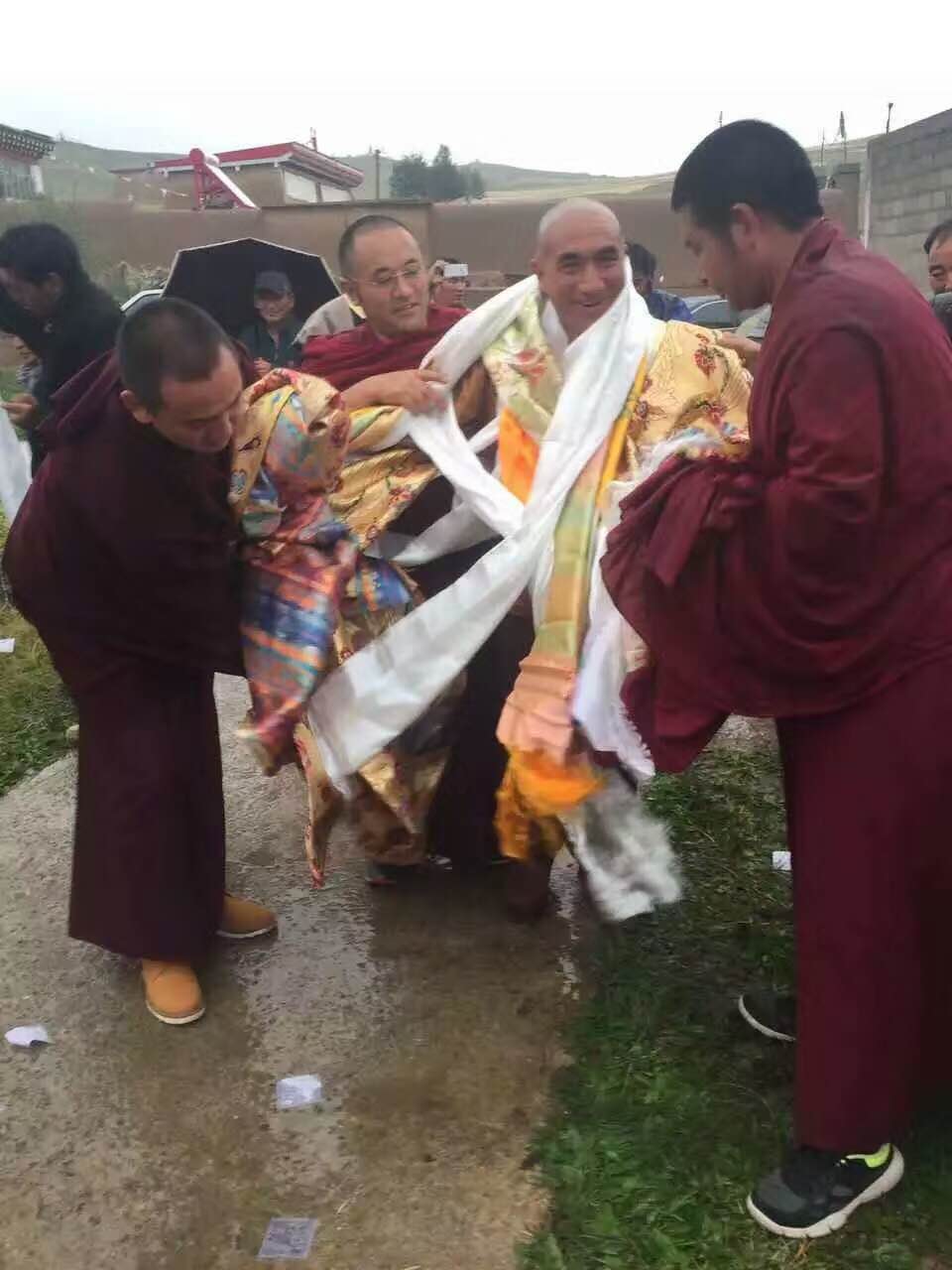
Jamyang Phuntsok connu sous le pseudonyme de Jangkho, 41 ans, vient d’ être libéré ce 2 septembre 2016 de la Prison Mianyang, située près de la ville de Chengdu, capitale du Sichuan. Il fut l’un des premiers Tibétains à être arbitrairement retenu et sa condamnation était en rapport avec une auto-immolation.
Jangkho, un moine au Monastère local de Kirti, a été arbitrairement retenu dans la nuit du 3 mars 2009, deux jours après qu’un autre moine tibétain, Tapey, se soit immolé, ce qui fut le premier sacrifice enregistré au Tibet, en signe de protestation. Tapey avait réchappé à son sacrifice, le 27 février 2009, mais de graves brûlures avaient nécessité des soins chirurgicaux importants. À l’époque, les médias chinois avaient prétendu que Jangkho avait divulgué des informations relatives à l’ auto-immolation de Tapey et partagées illégalement avec des étrangers. Les médias d’ Etat chinois déclaraient que Jangkho avait inventé un faux témoignage, relatant que les forces de sécurité chinoises avaient tiré sur Tapey alors qu’ il était déjà en feu.
Cependant des informations complémentaires reçues par TCHRD prouvent cependant que Tapey avait probablement été blessé par balles, tirées dans les jambes, malgré le feu qui le dévorait. reniant ainsi la thèse chinoise prétendant que Jangkho avant menti.
Suite en anglais seulement :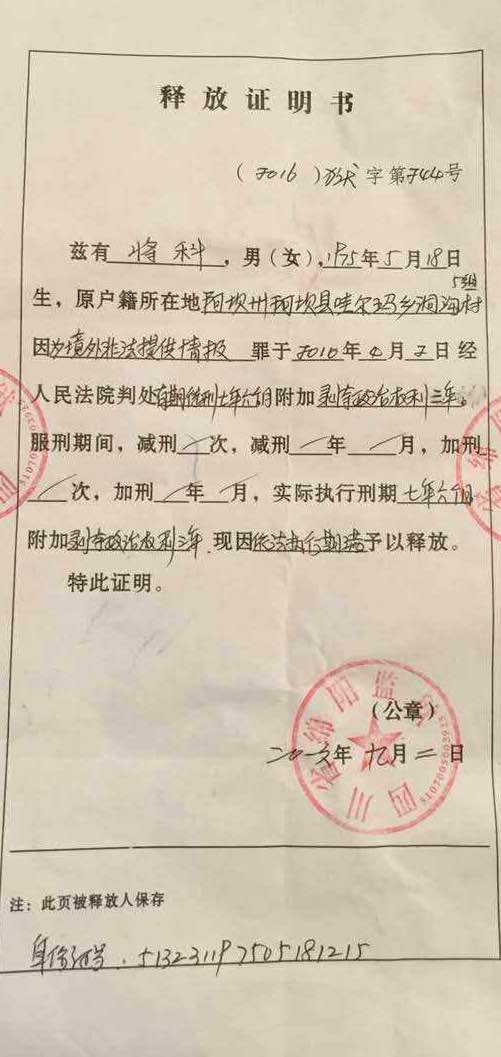 Information released earlier on Jangkho incorrectly noted that he was sentenced on 9 April 2010 to six years. According to Jangkho’s prison release document obtained by TCHRD, Jangkho was sentenced on 2 April 2010 to seven years and six months on the charge of “illegally sharing secrets with outsiders” by the Ngaba (Ch: Aba) Intermediate People’s Court, located in Ngaba Tibetan and Qiang Autonomous Prefecture, Sichuan Province.
The release document specifies that Jangkho has also been deprived of ‘political rights’ for three years which he has to serve from 2 September 2016 to 1 September 2019. Article 54 of Chinese Criminal Law lists the deprivation of following rights: the right to vote and stand for election; the rights of freedom of speech, of the press, of assembly, of association, of procession and of demonstration; the right to hold a position in a State organ; and the right to hold a leading position in any State-owned company, enterprise, institution or government organisation.
In Tibet, many of the rights listed above do not exist for even those who are not subjected to deprivation of political rights. Basic human rights and freedoms such as right to vote, freedom of speech, of the press, of assembly, of association, of procession and of demonstration have increasingly been criminalised in recent years. In addition, former political prisoners are subjected to surveillance and their movements are restricted and monitored.
In July this year, Chinese authorities in Ngaba County distributed a booklet in Tibetan Buddhist monasteries that listed acts such as self-immolation and sharing information online as ‘inciting separatism’ and ‘illegally sharing information with outsiders’.
]]>
Information released earlier on Jangkho incorrectly noted that he was sentenced on 9 April 2010 to six years. According to Jangkho’s prison release document obtained by TCHRD, Jangkho was sentenced on 2 April 2010 to seven years and six months on the charge of “illegally sharing secrets with outsiders” by the Ngaba (Ch: Aba) Intermediate People’s Court, located in Ngaba Tibetan and Qiang Autonomous Prefecture, Sichuan Province.
The release document specifies that Jangkho has also been deprived of ‘political rights’ for three years which he has to serve from 2 September 2016 to 1 September 2019. Article 54 of Chinese Criminal Law lists the deprivation of following rights: the right to vote and stand for election; the rights of freedom of speech, of the press, of assembly, of association, of procession and of demonstration; the right to hold a position in a State organ; and the right to hold a leading position in any State-owned company, enterprise, institution or government organisation.
In Tibet, many of the rights listed above do not exist for even those who are not subjected to deprivation of political rights. Basic human rights and freedoms such as right to vote, freedom of speech, of the press, of assembly, of association, of procession and of demonstration have increasingly been criminalised in recent years. In addition, former political prisoners are subjected to surveillance and their movements are restricted and monitored.
In July this year, Chinese authorities in Ngaba County distributed a booklet in Tibetan Buddhist monasteries that listed acts such as self-immolation and sharing information online as ‘inciting separatism’ and ‘illegally sharing information with outsiders’.
]]>
Le premier site d'actualit? sur le Tibet
www.tibet.fr

Rechercher sur France-Tibet