


TASHI DELEK,
HAVE A NICE ORGYEN RINPOCHE‘S DAY !
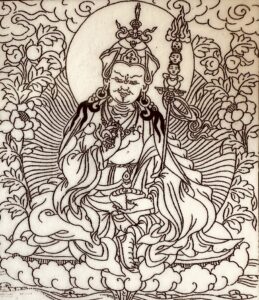
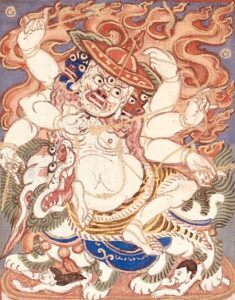
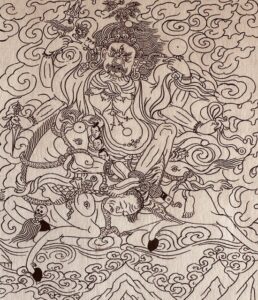
To our companions and protectors of all times, to the sovereign Pehar Gyalpo, to Pālden Lhamo, to Orgyen Rinpoche, and to the entire lotus family
France–Tibet : « My historical truth » ( la version française suit ci-dessous)
By a Little Silly Tibetan, French at heart and through history
“I do not have a single drop of French blood, but it is France that flows through my veins”
In 1962, France welcomed me as Tibetan, and adopted me as Tibetan, I insist on this status, as a ward of the Nation, under the presidency of Charles de Gaulle, in 1964, it recognized the People’s Republic of China. The order of facts says it all, Tibet was not invented after the fact, it was already recognized as a reality. In October 1962, France officially welcomed Tibetans to France, recognized as such in administrative documents, in those documents, the term “Tibet” appeared, either as origin or as nationality. Moreover, President de Gaulle had officially entrusted one of his companions of the Resistance and Liberation, a Councillor of State, Admiral Ortoli, along with his wife, Mrs Bryhils Helander, an orientalist and multilingual scholar who spoke Tibetan and had begun writing a French–Tibetan dictionary as early as 1955, with organizing this reception, for that purpose, they met the Dalai Lama twice, in 1959 and 1960, according to their sons still alive, with whom I have remained in contact. From as early as 1959, private correspondence existed between the Dalai Lama and General de Gaulle, marked by mutual respect, showing that the Tibetan issue was known, followed and taken into consideration at the highest level of the French state. This implies a simple fact, Tibet was not non-existent for France, Tibetan identity was officially recognized, this recognition is not a recent construction, it even predates the geopolitical choice of 1964.
And yet, today, Emmanuel Macron’s France is no longer that of General de Gaulle.
And yet, France cannot be reduced to the position of its executive alone. For while the French executive tends to deny the reality of Tibet and its people, another France remains, that of the French people, of the national representation, I am thinking in particular of Madame Jacqueline Eustache-Brinio and the International Information Group on Tibet that she chairs in the Senate, whose support for Tibet and the Tibetan people is constant, that also of the many Tibetan Buddhist centers, of Tibetan studies with INALCO, the Collège de France, of researchers, of artists. These are voices, fields of knowledge and commitments which, in France itself, recognize a simple truth, Tibet exists, and the Tibetan people exist.
Where France once recognized a human and historical reality, the current executive now recognizes only a geopolitical one, in the name of the One China policy, it considers Tibet as an integral part of the People’s Republic of China, without any political existence of its own. This shift does not stop at diplomacy, it is part of a broader orientation, in a context where business failures have reached record levels in France, and where “Made in China” has become widespread in many sectors, the executive simultaneously encourages Chinese companies to establish themselves on French and European soil. According to Le Figaro, business failures reached a record high in 2024, with 68,500 insolvencies in a single year, one can easily imagine the number of French families affected. Faced with competition often described as unfair, this policy raises questions, does it not, in practice, weaken the national economic fabric while facilitating the establishment of Chinese economic actors?
This logic goes beyond the economic sphere and extends into the political and symbolic domain, the erasure of the word “Tibet” in public institutions such as the Guimet Museum, the administrative assimilation of Tibetan nationals to Chinese nationality, whereas the France of General de Gaulle recognized them as Tibetans, a cautious attitude toward forms of influence or interference by the Chinese Communist Party on French soil. In an official response published by the National Assembly, the Ministry of the Interior indicated that the DGSI had identified nine Chinese “police stations” operating in France without declaration, used to monitor, intimidate or attempt to repatriate members of the diaspora, measures have been taken to put an end to them, this is therefore not a militant claim, but a fact acknowledged by the State itself. Although the Ministry of the Interior stated that these illegal structures were no longer active, the facts revealed in recent years highlight Chinese interference on French territory, journalistic investigations, notably in the program Envoyé spécial, have documented surveillance, intimidation and attempted repatriation operations targeting members of the diaspora. At the same time, the Swiss state has officially recognized the existence, on its territory, of forms of Chinese transnational repression targeting Tibetans, Uyghurs and Chinese dissidents, the comparison is telling, where some states openly name these practices, the French executive appears to choose caution, or even complacency toward the Chinese state. The question therefore arises clearly, how far can a foreign state exercise a form of authority on French territory?
At the same time, France has authorized the establishment on its soil of a European broadcasting branch of the Chinese channel CGTN, after it was banned in the United Kingdom, which considered it an organ of state propaganda. Thus, a growing gap appears between two realities, that of a France which, yesterday, recognized Tibetans as such, and that of today, which tends to dilute them into a political category that is not theirs, but that of their oppressors. France recognizes China, but in doing so, it should not cease to recognize what it once recognized, the existence of a people, an identity, a history. For one cannot, without contradiction, welcome Tibetans as such and, a few decades later, accept their erasure, even silently, unless one accepts that yesterday’s truth be sacrificed to today’s interests.
In short, under de Gaulle, Tibet existed in French administrative documents, as origin or as nationality, and the Tibetan people were recognized in their identity, today, under Emmanuel Macron, a very different logic is taking hold, that of a gradual denial of the right of Tibet and the Tibetan people to exist. Erasing the word “Tibet” and replacing it with “Himalayan World” at the Guimet Museum, an institution under the supervision of the State, is not trivial, it is a political act, can one accept renaming France as the “Alpine world”? This shift is part of a broader dynamic, that of the erasure of Tibet and of the identity of the Tibetan people, aligning with the policy of the People’s Republic of China. Historically, Tibet has never been part of China, and the Tibetan people have never been a “Chinese ethnic minority”, they are and intend to remain a people in their own right, and under international law, one truth remains, Tibet and the Tibetan people have the right to exist.
For one who grew up in France and knows the weight of its history, this raises a simple question, how far can one go, in the name of pragmatism, without renouncing the values one stands for? France was also built on the refusal of the unacceptable and on fidelity to certain principles, can one, therefore, defend the existence of a country and its people, and at the same time appear, with a sometimes feverish pride, alongside those who contest that very existence? I cannot accept it, for beyond the discomfort, it is, in my view, a form of shame.
Long live Tibet
Long live the Tibetan people
On this 10th day (Orgyen Rinpoche’s day) of the 2nd month, of the Tibetan year 2153, the Fire Horse,
གུས་བོད་པའི་གླེན་ཆུང་ནུབ་པ་ཨོ་རྒྱན་ནས།
The Little Silly Tibetan Ugen
Vice-President of France-Tibet
Photos: Tsaklis Orgyen Rinpoche, Péhar Gyalpo, Pālden Lhamo Rémati©️Gesar Dralha collection
One of the founders of the Tibetan Community of France and its Friends (CTFA) in 1981, drafter of the association’s statutes and creator of its logo “Fraternity in the Hexagon”
Co-founder, with Father Christian Delorme in Lyon, in 1982, of the association Les Amitiés Franco-Tibétaines
NB : This message is addressed in particular to the Central Tibetan Administration, regarding its policy of public positioning.
The logic of “at the same time”, dear to Emmanuel Macron, cannot be ours. It introduces confusion and weakens the clarity of our commitment.
Non-violent Tibetan resistance requires coherence, dignity and truth. It cannot accommodate ambiguity in the face of those who deny the existence of Tibet and its people.
https://tibet.fr/actualites/le-mot-du-jour-du-vice-president-de-france-tibet/
Version française
TASHI DELEK,
BELLE JOURNÉE D‘ORGYEN RINPOCHÉ !
A nos accompagnateurs, protecteurs et protectrices de toujours, au souverain Pehar, à Pālden Lhamo, à Orgyen Rinpoché et à toute la famille des lotus
France–Tibet : « Ma vérité historique »
Par un P’tit Bêtain, français de cœur et d’histoire
« Je n’ai pas une goutte de sang français, mais c’est la France qui coule dans mes veines »
En 1962, la France m’accueille comme Tibétain, et m’adopte comme Tibétain, j’insiste sur ce statut, pupille de la Nation, sous la présidence de Charles de Gaulle, en 1964, elle reconnaît la République populaire de Chine. L’ordre des faits dit tout, le Tibet n’a pas été inventé après coup, il était déjà reconnu comme une réalité. En octobre 1962, la France accueillait officiellement des Tibétains en France, reconnus comme tels dans les documents administratifs, dans ces documents, le terme « Tibet » figurait, soit comme origine, soit comme nationalité. D’ailleurs, le président de Gaulle avait chargé officiellement l’un de ses compagnons de la Résistance et de la Libération, conseiller d’État, l’amiral Ortoli, ainsi que son épouse, Mme Bryhils Helander, orientaliste et multilingue parlant le tibétain, qui avait entrepris dès 1955 l’écriture d’un dictionnaire franco-tibétain, d’organiser cet accueil, à cette fin, ils se sont rendus auprès du Dalaï-Lama à deux reprises, en 1959 et 1960, selon leurs fils encore vivants, avec lesquels j’ai gardé contact. Dès 1959, des correspondances privées existaient entre le Dalaï-Lama et le général de Gaulle, empreintes d’un respect mutuel, attestant que la question tibétaine était connue, suivie et prise en considération au plus haut niveau de l’État français. Cela implique une évidence simple, le Tibet n’était pas inexistant pour la France, l’identité tibétaine était reconnue officiellement, cette reconnaissance n’est pas une construction récente, elle précède même le choix géopolitique de 1964.
Et pourtant, aujourd’hui, la France d’Emmanuel Macron n’est plus celle du général de Gaulle.
Et pourtant, la France ne se résume pas à la seule position de son exécutif. Car si l’exécutif français tend à nier la réalité du Tibet et de son peuple, une autre France demeure, celle du peuple français, de la représentation nationale, je pense notamment à Madame Jacqueline Eustache-Brinio et au groupe d’information internationale sur le Tibet qu’elle préside au Sénat, dont le soutien au Tibet et au peuple tibétain est constant, celle aussi des nombreux centres bouddhistes d’obédience tibétaine, de la tibétologie avec l’Inalco, le Collège de France, des chercheurs, des artistes. Autant de voix, de savoirs et d’engagements qui, en France même, reconnaissent une évidence simple, le Tibet existe, et le peuple tibétain existe aussi en France.
Là où la France reconnaissait une réalité humaine et historique, l’exécutif actuel ne reconnaît plus qu’une réalité géopolitique, au nom de la politique d’une seule Chine, il considère le Tibet comme faisant partie intégrante de la République populaire de Chine, sans existence politique propre. Ce glissement ne se limite pas à la diplomatie, il s’inscrit dans une orientation plus large, dans un contexte où les faillites d’entreprises atteignent des niveaux records en France, et où le « made in China » s’impose dans de nombreux secteurs, l’exécutif encourage dans le même temps l’installation d’entreprises chinoises sur le sol français et européen. Selon Le Figaro, les faillites d’entreprises ont atteint un niveau record en 2024, avec 68 500 dépôts de bilan en une seule année, on mesure aisément le nombre de familles françaises impactées. Face à une concurrence souvent qualifiée de déloyale, cette politique interroge, ne contribue-t-elle pas, en pratique, à fragiliser le tissu économique national, tout en facilitant l’implantation d’acteurs économiques chinois.
Cette logique dépasse le seul cadre économique et se prolonge dans le champ politique et symbolique, effacement du mot « Tibet » dans des institutions publiques comme le musée Guimet, assimilation administrative des ressortissants tibétains à la nationalité chinoise, là où la France du général de Gaulle les reconnaissait comme Tibétains, prudence face aux formes d’influence ou d’ingérence du Parti communiste chinois sur le sol français. Dans une réponse officielle publiée par l’Assemblée nationale, le ministère de l’Intérieur a indiqué que la DGSI avait identifié 9 « stations de police » chinoises disposant de relais en France, non déclarées, utilisées pour surveiller, intimider ou tenter de rapatrier certains membres de la diaspora, des mesures ont été prises pour y mettre fin, il ne s’agit donc pas d’une affirmation militante, mais d’un fait reconnu par l’État lui-même. Bien que le ministère de l’Intérieur ait indiqué que ces dispositifs illégaux n’étaient plus actifs, les faits révélés ces dernières années mettent en lumière des ingérences chinoises sur le territoire français, des enquêtes journalistiques, notamment dans l’émission Envoyé spécial, ont documenté des opérations de surveillance, d’intimidation et de tentative de rapatriement au sein de la diaspora. Dans le même temps, l’État suisse a officiellement reconnu l’existence, sur son sol, de formes de répression transnationale chinoise visant les Tibétains, les Ouïghours et les dissidents chinois, la comparaison est éclairante, là où certains États assument de nommer ces pratiques, l’exécutif français semble, lui, faire le choix de la prudence, voire de la complaisance à l’égard de l’État chinois. La question se pose alors clairement, jusqu’où un État étranger peut-il exercer une forme d’autorité sur le territoire français.
Dans le même temps, la France a autorisé l’installation sur son sol d’une antenne de diffusion européenne de la chaîne chinoise CGTN, après son interdiction au Royaume-Uni, qui l’avait considérée comme un organe de propagande de l’État chinois. Ainsi se creuse un écart de plus en plus visible entre deux réalités, celle d’une France qui, hier, reconnaissait les Tibétains comme tels, et celle d’aujourd’hui, qui tend à les diluer dans une catégorie politique qui n’est pas la leur, mais celle de leurs bourreaux. La France reconnaît la Chine, mais ce faisant, elle ne devrait pas cesser de reconnaître ce qu’elle a elle-même reconnu, l’existence d’un peuple, d’une identité, d’une histoire. Car on ne peut pas, sans contradiction, accueillir des Tibétains comme tels, et, quelques décennies plus tard, accepter leur effacement, même silencieux, à moins d’accepter que la vérité d’hier soit sacrifiée aux intérêts d’aujourd’hui.
Bref, sous de Gaulle, le Tibet existait dans les documents administratifs français, comme origine ou comme nationalité, et le peuple tibétain était reconnu dans son identité, aujourd’hui, sous Emmanuel Macron, s’installe une tout autre logique, celle d’un déni progressif du droit d’exister du Tibet et du peuple tibétain. Effacer le mot « Tibet » pour le remplacer par « Monde himalayen » au Musée Guimet, établissement placé sous la tutelle de l’État, n’est pas anodin, c’est un acte politique, peut-on accepter de renommer la France en « monde alpin » ? Ce glissement participe d’une logique plus large, celle d’un effacement du Tibet et de l’identité du peuple tibétain, qui tend à s’aligner sur la politique de la République populaire de Chine. Historiquement, le Tibet n’a jamais fait partie de la Chine, et le peuple tibétain n’a jamais été une « minorité ethnique » chinoise, il est et entend rester un peuple à part entière, et au regard du droit international, une évidence demeure, le Tibet et le peuple tibétain ont le droit d’exister.
Pour qui a grandi en France et connaît le poids de son histoire, cela soulève une question simple, jusqu’où peut-on aller, au nom du pragmatisme, sans renoncer aux valeurs que l’on défend ? La France s’est construite aussi dans le refus de l’inacceptable et dans la fidélité à certains principes, peut-on, dès lors, défendre l’existence d’un pays et de son peuple, et dans le même temps s’afficher, avec une fierté parfois fébrile, aux côtés de ceux qui en contestent la réalité ? Je ne peux m’y résoudre, car au-delà du malaise, cela relève, pour moi, d’une forme de honte.
Vive le Tibet
Vive le Peuple Tibétain
En ce 10ème jour (jour d’Orgyen Rinpoché) du 2ème mois, de l‘an tibétain 2153, cheval de feu,
གུས་བོད་པའི་གླེན་ཆུང་ནུབ་པ་ཨོ་རྒྱན་ནས།
Le P’tit Bêtain Ugen
Vice-Président de France-Tibet
https://tibet.fr/
Photos : Tsaklis Orgyen Rinpoché, Péhar Gyalpo, Pālden Lhamo Rémati©️collection de Gesar Dralha
Un des fondateurs de la Communauté Tibétaine de France et ses Amis (CTFA) en 1981, rédacteur des statuts de l’association et créateur de son logo « Fraternité dans l’Hexagone »
Fondateur, avec le Père Christian Delorme à Lyon, en 1982, de l’association Les Amitiés Franco-Tibétaines
NB : Ce message s’adresse particulièrement à l’Administration centrale tibétaine, dans sa politique d’affichage.
La logique du « en même temps », chère à Emmanuel Macron, ne peut être la nôtre. Elle introduit une confusion qui affaiblit la clarté de notre engagement.
La résistance tibétaine non-violente exige cohérence, dignité et vérité. Elle ne peut s’accommoder d’ambiguïtés face à ceux qui nient l’existence du Tibet et de son peuple.